
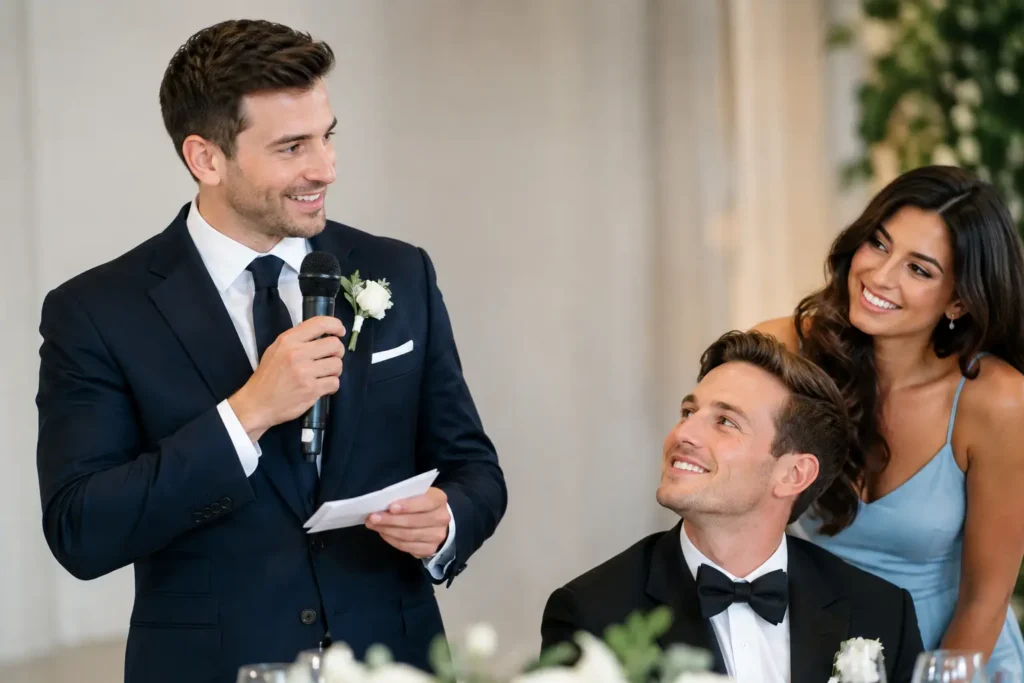
The best man speech advice for the groom’s big day is brutally simple: make him look brilliant, make the room laugh, and do not turn five minutes at the microphone into an unplanned court case about the stag weekend. You have been handed a prime slot in the wedding. Treat it like a proper job, then enjoy the glory when the room is roaring.
A great best man speech is not about proving you know the groom best. It is about giving everyone in the room a sharp, affectionate glimpse of the man the bride has chosen, without making her wonder whether she should have checked the return policy.
Start with the only job that matters
Your speech should celebrate the groom and the couple, not your own comic genius. That sounds obvious, but plenty of best men get carried away after a few pints and mistake old WhatsApp screenshots for wedding material.
The groom needs to come out of your speech looking like a top bloke. He can be mildly roasted, obviously. In fact, a groom who escapes completely untouched will look suspiciously well behaved.
But the laughs should land on harmless flaws: his inability to be on time, his ridiculous obsession with football transfers, or the way he claimed he was “not bothered” about the stag itinerary before becoming group-chat dictator. Keep it affectionate. Keep it recognisable. Most of all, keep it safe for grandparents, colleagues and the bride’s parents.
Best man speech advice for the groom: use a strong shape
Winging it is for karaoke, not wedding speeches. Give yourself a simple structure that keeps the energy moving and prevents the classic best man disaster: a rambling tale that has no obvious ending.
Use these four beats, then write in your own voice:
- Open fast. Introduce yourself, thank the key people who need thanking, and get one early laugh. Do not spend two minutes explaining how you know the groom. The room can work it out.
- Tell one real story. Pick an anecdote that shows his character under pressure, in love, or hilariously out of his depth. A single well-told story beats a greatest-hits reel of twenty half-finished memories.
- Bring in the bride properly. Say what changed when she arrived, or what you noticed about him when he met her. This is where the speech gets its heart without turning into a cheesy romcom audition.
- Finish clean. Offer a genuine wish for their future, ask everyone to raise a glass, and toast the couple. Land the plane. Do not circle back for “one last thing”.
That framework gives you a speech with pace. It also leaves room for personality, which is what separates a proper crowd-pleaser from something that sounds copied from a wedding forum.
Pick stories that survive daylight
The safest test for any joke is this: would you happily tell it again, sober, while standing next to the bride’s dad? If the answer is no, bin it.
A stag do can produce legendary material. It can also produce stories that belong in the group chat forever. There is a difference between mentioning the groom’s heroic commitment to a fancy-dress theme and sharing details that could make a room go quiet enough to hear the cutlery hit the plates.
Leave out exes, money disasters, illegal behaviour and anything that puts another guest in an awkward spotlight. Also avoid jokes about the groom being trapped, controlled, or somehow losing his freedom. They are tired, and they make a happy occasion sound strangely bleak.
If you are stuck, go backwards. Ask yourself what the groom was like at school, in his first flat, or during the early days of your friendship. The best stories usually reveal a trait that is still there now. Maybe he was always overconfident. Maybe he has always been absurdly loyal. That gives the speech a real point.
Roast the habit, not the man
A useful roast has warmth underneath it. “He once spent forty minutes choosing a pub, then ordered the same lager he always gets” is funny because it is small and familiar. “He is useless at everything” is not a joke. It is just your mate being publicly insulted in a suit.
Be specific, too. Specificity is where the laughs live. A vague line about him being messy will get polite smiles; a detail about the ancient protein shaker he refuses to throw away can bring the house down.
Give the bride more than a compliment
The bride should not appear only as “someone lovely who puts up with him”. That line has been used so often it should be retired with full honours.
Talk about the couple as a unit. You might mention how she brings out his calmer side, how he became suspiciously keen on Sunday lunches after meeting her, or how everyone knew this was serious because he actually answered his phone. Keep it truthful. The best emotional moments are usually the least polished.
If you know the bride well, include a brief personal line for her. If you do not, do not force a fake friendship. Speak with respect, say what you have seen in the way they are together, and move on. Honest beats overfamiliar every time.
Write it out, then make it sound like you
Write a full draft first. Yes, word for word. You are not reading it like a newsreader on the day, but having the full version stops you forgetting the important bit after the first laugh or the first nervous sip.
Then edit hard. Most best man speeches improve when you cut a quarter of the material. Delete repeated jokes, long backstory and any sentence that only makes sense to two lads from university.
Aim for roughly five minutes. Six can work if the room is properly with you. Ten is a hostage situation, especially if there are several speeches and the bar is visible from the tables.
Read it aloud at least twice. You will quickly find phrases that look fine on a screen but sound like you swallowed a wedding brochure. Swap them for words you would actually say down the pub.
Deliver it without trying too hard
You do not need to perform like a stand-up comic. Speak slightly slower than normal, look up between lines, and let people laugh before charging into the next gag. Nervous best men often rush because they want it over with. That is how good jokes disappear into the noise.
Bring notes. Nobody gives a trophy for memorising five minutes of material, and a small card is far better than staring at your phone like you are ordering a taxi. Print your speech in a clear font, with generous spacing and key words marked so you can find your place quickly.
Keep the drinks sensible until you are done. One confidence pint is understandable. Turning up half-cut because the groom insisted everyone start early is how names get forgotten and punchlines become archaeology.
If you lose your place, pause. Smile. Take a breath and say, “I had a much better version of that in my head.” The room will be on your side, because nearly everyone there would rather wrestle a bear than give a speech.
End with a toast worth raising
Your final lines should be warm and direct. Say what you genuinely admire about the groom, acknowledge what the couple have found in each other, then ask everyone to stand or raise a glass.
Do not chase a final savage joke. A big laugh is great, but a sincere finish gives the whole speech weight. After the wild stag stories, the late-night planning, and the wedding-day nerves, this is your chance to give your mate a moment he will remember for the right reasons.
Make him laugh. Make his new wife feel celebrated. Then lift your glass, nail the toast, and get back to the bar knowing you have done the job properly.
