

Table of Contents
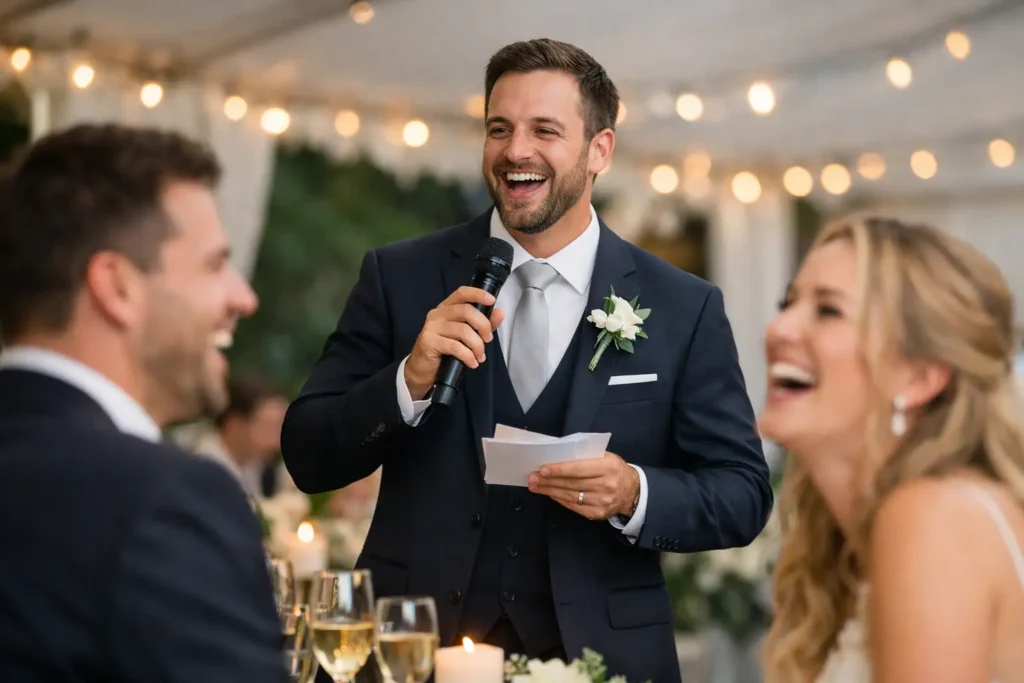
The best man speech structure is not about sounding like a stand-up comic with a borrowed mic. It is about giving the groom a proper send-off, getting the room on side early, and landing one memorable finish without making his gran wish she had left after the main course.
You have one job: make the groom look brilliant. A few cheeky stories are expected, obviously, but the speech is not your chance to relive every bad decision from uni or the stag weekend in forensic detail. Keep the energy high, keep the affection obvious, and know exactly where you are going before you start talking.
Why a Clear Best Man Speech Structure Wins
Wedding guests are a mixed crowd. You have mates who know every inside joke, relatives who have met you once, and people at the back wondering whether dessert is on its way.
A structure gives everyone something to follow. It stops the speech becoming a string of unrelated tales, and it means your biggest laugh does not arrive five minutes after the room has mentally checked out. More importantly, it gives you a reliable route back to the groom and his partner, which is where the speech needs to land.
The sweet spot is usually five to seven minutes. Go shorter if you are nervous or only have one genuinely strong story. Go longer only when you have earned it, because no amount of confidence can save ten minutes of rambling.
The Five Beats That Keep the Room With You
Think of your speech as five simple beats, not a block of words you must memorise line by line. That approach feels more natural on the day and gives you room to react when someone laughs louder than expected.
1. Open fast and establish who you are
Start with your name and your connection to the groom, then give the room a quick reason to listen. This could be a warm observation about the day or a clean joke about being trusted with the microphone.
Do not spend a full minute thanking every person who has ever helped arrange a chair. Acknowledge the couple, thank the hosts if appropriate, then move on. The first thirty seconds should say: you are prepared, you are pleased to be there, and this will not be painful.
A good opening might sound like this: “For anyone who has not met me, I’m Dan, the groom’s best man. For those who have met me, I apologise that they have given me a microphone.”
It is simple. That is the point.
2. Tell one story that reveals the groom
This is the heart of the best man speech structure. Pick one story that shows his character rather than trying to squeeze in every funny moment from the last fifteen years.
The best stories have a clear beginning, a small bit of trouble, and a payoff. They also work for people who were not there. If the punchline relies on the audience knowing a nickname, a nightclub, and a bloke called Gaz from 2014, it needs more work.
Keep the groom as the hero, even if the story starts with him being a complete liability. Perhaps he got lost on a group trip but somehow became the only man who could negotiate the way home. Maybe he has always been absurdly competitive, yet that same determination is why he turns up for the people he loves.
A story should tease him, then reveal something decent underneath. That is the move.
3. Add a second laugh, not a second epic
You only need another short moment to keep the momentum up. Make it a contrast to the first story, such as his terrible cooking, his odd dating habits before he met his partner, or his inability to pack for a weekend away without bringing half the wardrobe.
This is where many best men lose control. They sense the room laughing and start piling on extra details, impressions, and stories that were funny at the pub but are not wedding material.
Leave them wanting another line. It is far better than watching the laughter fade while you explain why the third instalment was supposedly hilarious.
4. Bring in the partner with genuine warmth
Now shift the focus. The room needs to hear that this is a wedding speech, not a groom roast with formalwear.
Say what changed when the groom met their partner. Be specific if you can, because “you make him happy” is true but forgettable. Perhaps he became suspiciously organised, stopped pretending he did not care about Sunday lunch, or finally found someone who could match his stubborn streak.
Keep this section sincere without becoming syrupy. You are not auditioning to write a greetings card. A direct line about how good they are together will do more than a paragraph of flowery language.
5. Finish with a toast that has weight
Your closing should be brief, positive, and easy for the room to join. Return to the main point: why the groom is a good mate, why the couple work, and why everyone is delighted to celebrate them.
Then ask guests to raise a glass. Say both names clearly pause, and let the toast happen.
A strong closing could be: “He has always been the mate you want beside you when things get lively. Today, he has found the person he wants beside him for everything else. Please raise a glass to [name] and [name].”
What to Cut Before You Reach the Mic
The speech becomes better when you remove material, not when you add more. If a line needs a long explanation, bin it. If it could embarrass the groom’s partner or make a parent stare at the tablecloth, bin it faster.
Before the day, check your draft against these four danger zones:
- Stories involving exes, private rows, bodily functions, or anything that might turn the colour of the groom’s ears.
- In-jokes that only your friendship group will understand.
- Long thank-you sections that belong elsewhere in the wedding schedule.
- Claims that the stag was “too wild to talk about”, followed by a detailed attempt to talk about it.
A great stag weekend can give you material, whether it was a full-throttle Budapest mission or a low-key break closer to home. Still, use one safe reference at most. The wedding is not an after-action report, and nobody needs a blow-by-blow account of what happened after midnight.
How to Deliver It Without Looking Terrified
Write the speech in your own voice. If you would never say “I stand before you humbled”, do not suddenly become a Victorian poet because you are wearing a suit.
Practise aloud at least four times. The first run will show where you stumble, the next runs will expose the bits that are too wordy, and the final one should be timed with a drink nearby so you get used to holding something. Do not try to learn every syllable. Learn the route through the speech, plus the first and final lines exactly.
Use a small card or your phone with large notes. Full paragraphs invite you to read in a flat voice, while tiny prompts can leave you stranded after two pints. Aim for short sections, bold keywords, and generous spacing.
When you stand up, take a breath before speaking. Look at the groom, then the room. Slow down more than feels natural, because nerves make everyone talk like they are trying to catch the last train.
If You Are Not Naturally Funny
Good news: you do not need to be. The most reliable laughs come from recognition, not from trying to perform a gag you found online at 1am.
Be observant. A fond truth about the groom is funnier than a forced one-liner, especially when everyone in the room instantly knows it is accurate. If he treats choosing a restaurant like an international summit, say that. If he cannot watch football without becoming a self-appointed pundit, use it.
Then balance the joke with respect. The best man is trusted because he knows where the line is, not because he ignores it.
Give the speech enough preparation to feel calm, but not s much polish that it stops sounding like you. Speak to the groom, let the room share the moment, and finish before anyone starts checking whether the bar is open.
